Tag: Comedy

  • The Film-ification of TV

    The Film-ification of TV

    Every week, when I’m deciding what to write, I look at my calendar and my photos to see if anything significant has happened recently. Well, this is what my calendar for the past week looked like: 

    Crickets, crickets…*cue tumbleweed*

    And, besides a couple shots of the EPCOT ball (and the screenshot I just took of my empty calendar), my Google Photos is also looking pretty bleak. 

    Editor’s Note (which–still me; Im the editor): I *did* just complete a few Disney Programs classes and earn my Mouseter’s; however, at the time of my beginning to write this post, this was not yet the case.

    So, with no major life events to blog about, I turn to my current obsessions and see if there’s anything interesting about them. 

    Now, anyone who knows me knows I love TV shows. I’m always watching a show. Actually, I saw this stand-up special recently where the comic made a joke about how when her life flashes before her eyes, it’s going to be a reel of all of the TV series she’s watched. I’ve never felt so seen. And convicted. 

    Anway, I love TV shows, but it’s currently a hard time to be a TV fan. TV series have changed a lot recently. Because of streaming, weekly sitcoms are slowly fading out. In its place are TV dramas that release 10 episodes, each an hour long, all at once exclusively on one subscription streaming platform that costs $15 plus tax (your soul) every month. 

    A lot of my favorite series are from the 2010s era (think Modern Family, Parks and Rec, Big Bang Theory, etc.), but I didn’t watch them as they were coming out, since I was but a child at the time. I think it would have been really cool to be watching TV during a time when there were multiple shows with new episodes coming out every week. 

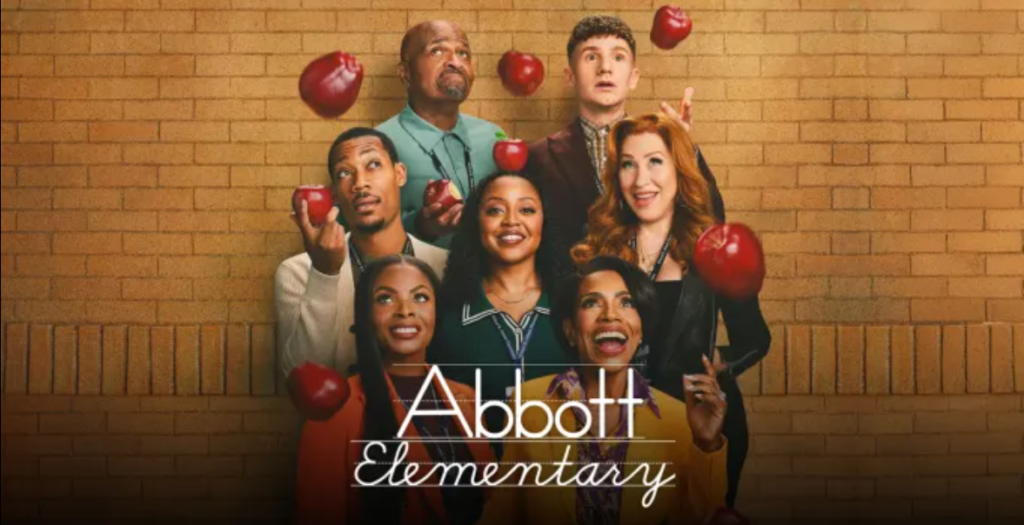
    It’s still somewhat around today; Abbott Elementary is one of my favorite sitcoms that releases weekly. But overall, weekly storytelling is something that is slowly slipping away from popular culture. Which is sad because serial storytelling has historically been an important part of the human experience. 

    Lately, I’ve seen many complaints about how TV shows are just 7-hour movies now or that we don’t have “filler episodes” anymore. And, like, if you take those two statements without really thinking about them much, you might just say, “Ok…so?”

    I mean, what’s the difference between ten 45-minute episodes and twenty-two 20-minute episodes? They both average out to about 7.5 hours of content. And if there’s no filler episodes, that means less time is being wasted, right? Right?? 

    No, not right. 

    There’s a lot more to consider when talking about how TV has changed, and when people complain about the length of episodes or the fact that there’s no more filler episodes, there’s a lot more beneath that. 

    Weekly storytelling has been a thing for, well, forever. Even before there were TV shows, there were short stories, periodicals, weekly comic strips, radio shows, etc. And because of the nature of having to produce something every week, not every episode/edition/article had the same “level” of storytelling, hence: filler episodes. 

    In the olden days, people used to complain about filler episodes because they did not further the overarching plot of the season. However, when these episodes went away, it became clear that they actually served other important purposes, such as furthering character development and continuing the worldbuilding of the show. Having episodes come out every week also gave people something to talk about that was kind of one step above small talk: “Oh, did you see the new episode of xyz show?” 

    So what’s happened now? Well, streaming, basically. Its created a phenomenon that I like to call the “Film-ification” of TV, and the “TV-ification” of film. Basically, TV shows and movies have switched places. 

    What do I mean? I’ll try my best to explain. 

    We’ll start with TV shows turning into movies. 

    Before streaming, movies were a bigger deal than TV shows. When you went to see a Marvel movie, you probably expected it to be “higher” quality than whatever workplace sitcom was currently airing. A TV show was something to keep people entertained for 20 minutes when they turned on the TV at home, a film was a “work of art”–something that would shape the culture and conversation for the foreseeable future. 

    However, with the introduction of streaming, that all began to change. 

    Introducing: the limited series. 

    Suddenly, big studios were releasing big budget TV dramas that had film-style production value. These shows were anywhere from 6-10 episodes, 45-60 minutes per episode. This is different from the classic TV dramas, which were also 45 minutes, but there were still 20-24 episodes per season (think medical dramas/police procedurals). 

    At first, these shows were very popular. Marvel really capitalized on it, releasing many limited series such as WandaVision, Loki, Hawkeye…basically every character that didn’t have a movie yet got a series instead. 

    The problem with this format, however, was that once the series ended, everyone wanted a season two, because that’s usually how TV shows work. However, these shows weren’t intended to operate like traditional TV. They were a one-time thing, a limited release. Like a movie. 

    Still, the format worked for a while. Audiences were engaged with the shows, and because the shows were being released by such popular studios, they were getting a lot of views, a lot of attention on social media, and thus were regarded as wildly successful. The pros of a limited series were that you could make a 10-hour story and not have to shave it down to two hours because a theatrical release was no longer necessary. Everyone could just watch it at home on their own time. 

    So, the goal of TV became not to tell a story over an extended period of time, but instead to capture the audience’s attention for a specific point in time, and get them to talk about whatever was currently releasing as much as possible before they moved onto the next thing. 

    Another way these limited series became like films is that there was one plotline throughout the entire series. Because of this, the plot felt very drawn out, and character growth was minimal. 

    So, this combination of plots being drawn out while simultaneously feeling too short without multiple seasons created feelings of dissatisfaction among fans. 

    And now, because every company has their own streaming service, there are a thousand limited series, and none of them are connected to each other, and it is literally impossible to watch/care about all of them. 

    AND, even further, now that the production value of these series has increased, many series do not get a next season until many years later (*cough cough* Stranger Things *cough cough*). And everyone forgets what happened previously. 

    Ok, so to recap: TV shows have turned into movies by upping the production value, drawing out the plot, and releasing all episodes at once, for one time only…until 5 years later when you get “Season 2.” That is the Film-ification of TV: releasing what is basically one movie, just broken up into 6-10 parts.  

    But now, another, kind of strange, phenomenon has emerged, and that is the TV-ification of Film. How does this work, you may ask? Well, it basically boils down to two things: 

    1. Sequels, Sequels, Sequels
    2. Everything is One Big Series

    We’ll start with point number one. Literally every movie in existence has a sequel, or multiple sequels by now. A common criticism of Disney/Pixar/Marvel etc. is that they are releasing more sequels than original stories. Not only is making a sequel of a popular movie likely to make more money, it’s also significantly easier to work on a story with a world and characters that you already know. There’s also less pressure to convince the audience to watch movies; if they liked the first one, they’re going to want to see the second one. So now, we have film franchises that have more sequels than TV shows have seasons, and it used to be the other way around. 

    Okay, now point two: everything is one big series. I’m specifically thinking of Marvel for this one. Basically, there are, like, a thousand Marvel movies. And they’re not all sequels (although I think we’re on the…5th…Spider-Man movie??), but they all exist in the same universe, and each movie is critical to understanding the storyline. 

    This has made it pretty much impossible for people to be introduced to the Marvel Cinematic Universe. They look at the list of 35+ movies now that are all connected (plus the limited series because yeah, those are canon too), and it’s overwhelming. Even as someone who loves the Avengers films, I find it hard to convince myself to keep watching the movies as they come out. The plot is too complicated now, and I don’t have time to go back and watch the previous 100 hours every time something new comes out. 

    I mentioned in my last post that my sisters and I got introduced to all the major “nerdy” franchises (Star Trek, Star Wars, Harry Potter, Marvel) by watching them as a family as each of us became “of age.” So like, first my parents watched those series with me, then me and my parents watched them with Rachel, then all of us plus Rachel watched them with Sarah, then all of us plus Sarah watched them with Joanna and Bethany, etc.

    When Rachel and I were first watching the Marvel movies in 2019, there were 22 movies. Now there are 37 (almost 38) to show Joanna and Bethany as of 2026. That’s 15 movies in seven years; more than two per year. 

    And so, you can see that TV series and films have switched. Instead of getting a season of TV every year and a sequel film every few years, now we get multiple sequel films per year, and one season of TV every three-ish years. Because it’s quicker to release two hours of content (one movie) than ten hours (one limited series). 

    Now, all is not lost. Despite the major film/tv studios following this new trend, there are still good standalone films being released and good TV shows being developed. One of my favorites that I mentioned earlier is Abbott Elementary. This is one of the only examples of a classic sitcom that is still being released currently. There are five seasons, 20-ish episodes in each season, and a new season comes out every year. (It’s been renewed for a Season 6–I’m so excited.) 
    Another cool series that was released recently was the second season of a show called Jury Duty. If you haven’t watched this show before, I highly recommend it. The premise is basically “What if we made a sitcom, and everyone was an actor except for one person?”
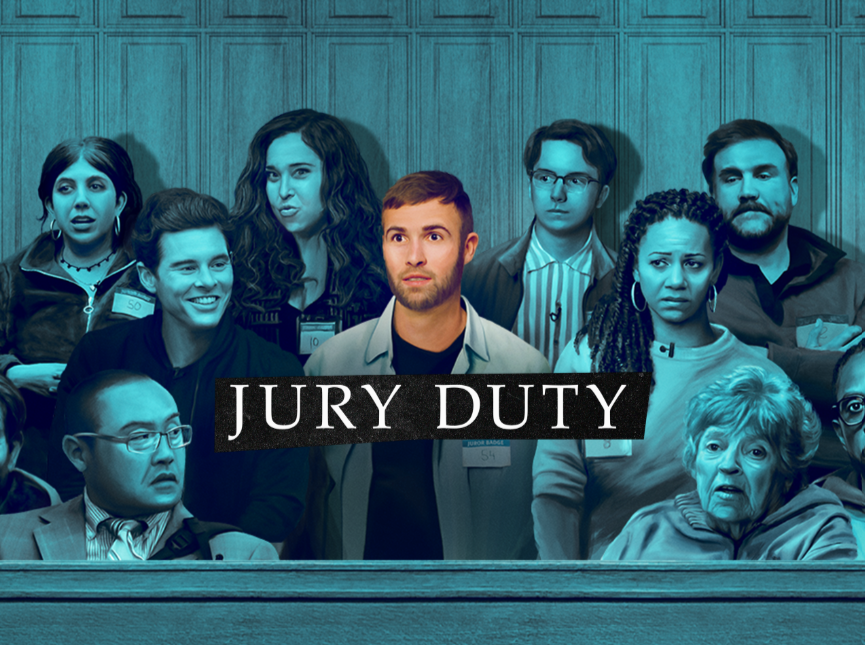
    The first season was about an eccentric group of people on a jury. Everyone was an actor except for one guy, who thought everything that was happening was real. The second season was about a company retreat with the same premise: one person thought that the company was real, but everyone involved was an actor. Both seasons are filled with wild and comical circumstances that could only happen in a TV show, but the actors are so good and the scenarios are developed so convincingly that the regular guy of each season fully buys into it. They also managed to find the most genuine guys you can think of, and they both became the “hero” of the show by the end of their respective seasons. 

    It’s a really cool series, and even though it’s not a classic sitcom, and there were multiple years between Seasons One and Two, it still managed to capture audiences and be a major topic of discussion for a minute. It’s kind of surprising that a show like that can be made now, especially when you think about how easily just having a cellphone could derail a whole show like that. But somehow it still worked, and it was incredible to watch. 

    So anyway, now that I’ve nerded out about TV shows for a hot minute, I’ll get to the point. I feel like one of the problems streaming has presented is everything is getting made with the standard of perfection. Now that TV episodes aren’t being released every week, the pressure is on to make something literally perfect because otherwise it won’t be worth the five years the audience had to wait to watch it. The only problem is, there’s almost nothing that is actually worth multiple years of waiting to see. Sure, there are some exceptions, but overall, not every piece of media should be intended to be a “masterpiece.” 

    Sometimes, the best compliment you can give a piece of content, whether it’s a TV show, movie, book, podcast, etc. is that it kept you entertained. If you were able to get into the story, or buy into the world, to the point where you forgot you were watching a show and instead were fully invested in what was happening, that’s a success. And sometimes that means tuning in to watch your favorite characters in a workplace comedy every week, and sometimes it means going to a movie theater to see something new. 

    Not every form of media is intended to be the same; that’s why there are so many! Every story should be told in the format that best serves the story, not the format that the industry expects. (Maybe next time I’ll talk about how every podcast has a visual element to it now…) 

    The content that will become timeless is the content that changes the game, and you can’t change the game by conforming to industry standards. 
    The only way to begin is by beginning.

    So. 

    I hope you’ve enjoyed me nerding out (and borderline ranting) about movies and TV shows for six pages. But actually, that’s kind of why I created this blog–because I was starting to get into this mindset where everything I wrote had to be perfect, and so I wasn’t writing anything. And that’s the beautiful thing about blogs: they’re not supposed to be perfect, and more importantly, no one blogs anymore! There’s no expectations, and I can talk about whatever I want 😎

    Anyway, maybe one day movies will go back to being movies, and TV will go back to being TV. But for now, I guess I’ll start on my 4th rewatch of Clone Wars (Lucasfilm Animation knows how to make a TV show) until something else catches my attention. 

  • A Cascade of Chaos

    A Cascade of Chaos

    A couple weeks ago, I had one of the most crazy, chaotic, and calamitous shifts I’ve ever had so far on my Disney program. Like truly, it was one of those days that only happens when you think, “Huh, my life’s been going pretty good,” the day before.  

    Literally, nothing good happened the entire shift. Which was bad for me in the moment, but is now good for present-me, because I have something to blog about! See that’s the thing about a bad day: 

    Sometimes, there’s nothing you can do about it except get through it. 

    …and then maybe blog about it later. 

    As I was thinking about it, though, I was like “Well, I *could* write about it, but what would even be the takeaway, or the point?” 

    Well, dear reader, I have no idea. So let’s find out together. 

    I will say this is a rather funny story to me now, and I believe it also has some entertainment value, so here we go. 

    It all starts with the fact that for this particular shift, I was working outside of my home location (so not my regular stores in Disney Springs). I was scheduled to work in Candy Cauldron, a candy store on the complete opposite side of Disney Springs. I had worked a few shifts there in previous weeks, so I pretty much knew what to expect. 

    Or, at least, I thought I did. 

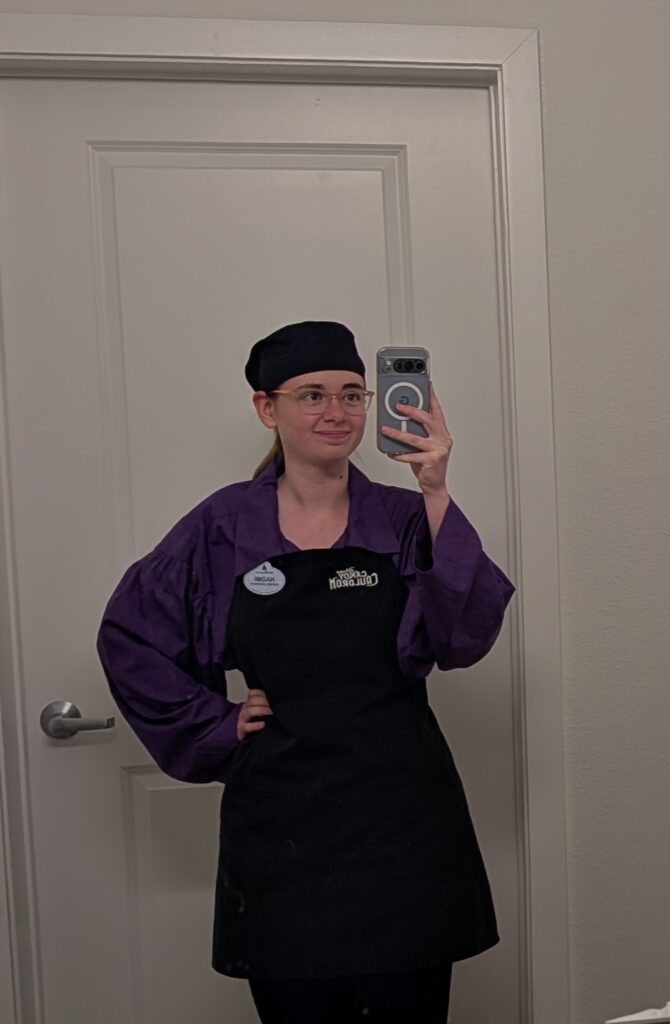
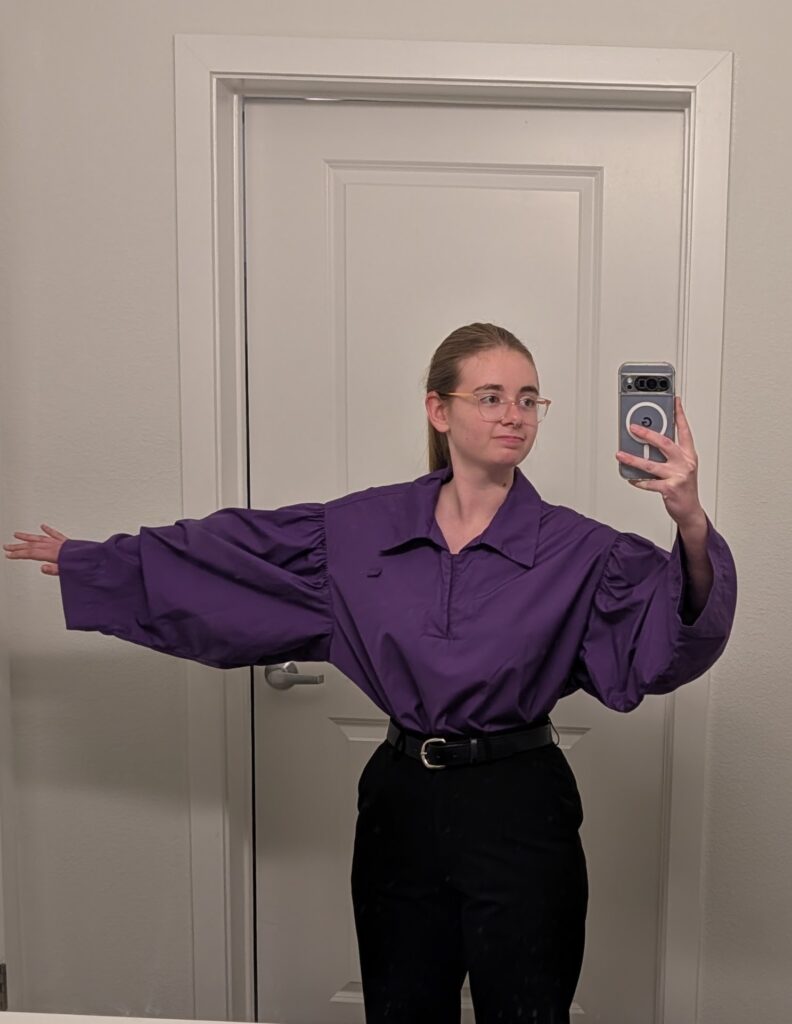
    The first thing you should know about this day is that the shirt I was wearing was about 4 sizes too big. This is due to the fact that costuming never has my size…ever. Luckily, the costume also has an apron that kind of hides the shirt, but here are some pictures just so you can visualize this more: 

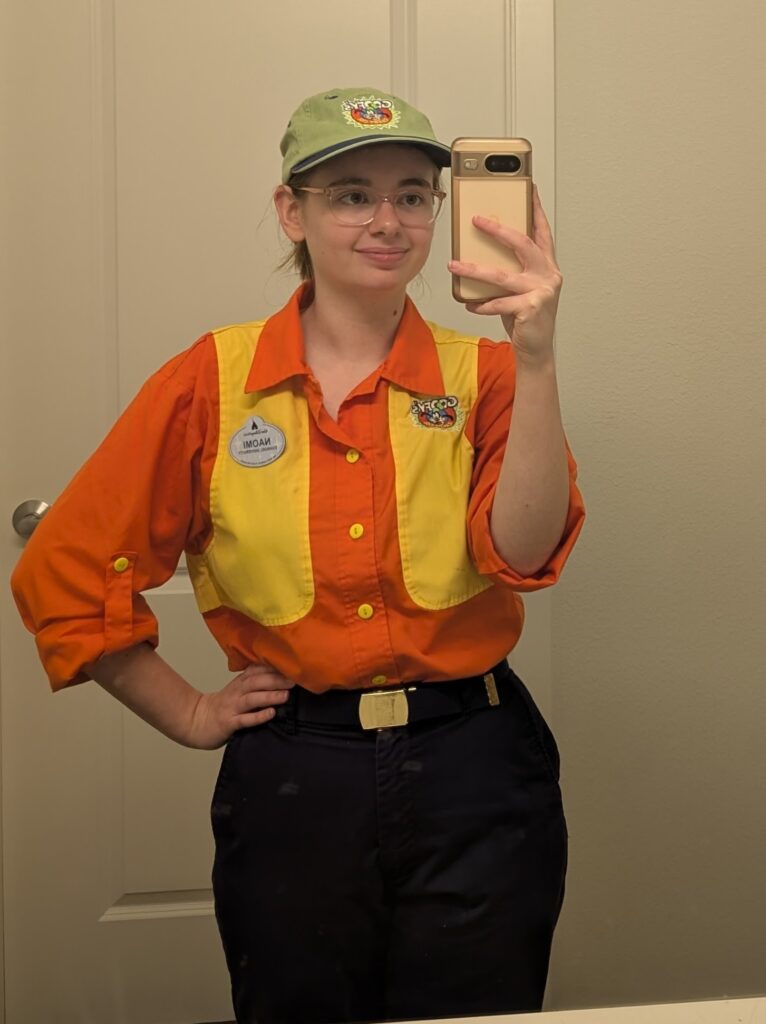
    As you can see, this is the flowiest shirt I’ve ever worn. However, I’m pretty used to crazy getups:

    I love twinning with Goofy every day

    Anyway, I’m in a giant shirt but otherwise in a pretty good mood. I was running a few minutes behind, but I managed to catch the bus on time, and that was all that mattered. People on the DCP love to complain about the buses (I can’t judge; there have been a few times where I’ve gone on a bus rant), but overall I have loved living in a walkable area with public transportation. As someone who hates driving, bus drivers are some of my favorite people in the world. However, sometimes the actual buses themselves can be a bit of an issue. And on this particular day, that turned out to be the case. 

    We had made it over halfway to Disney Springs. The bus that I take to work stops at a couple of resorts as part of the route, with Disney Springs being the last stop. We made it to the first resort with no problem, but then, as the bus was pulling out of the parking lot, we stopped at the stop sign to get back on the road…and then we stayed stopped. 

    And stayed stopped some more. 

    A couple minutes later…still not moving. 

    Then, the bus driver stood up and turned around to face us. 

    This is not a good sign, I thought. 

    I took out my earbuds and looked at her. 

    The bus driver explained that the bus was not accelerating like it was supposed to, and that it currently could not go more than 20 miles per hour. Because of this, she didn’t think we would be able to make it to Disney Springs safely, so she was calling a repair crew to come look at it, and in the meantime, we would have to wait for the next bus. 

    Well, I thought, this is inconvenient, but considering this is my first time being late for work ever, it’s not a big deal.

    And it can’t really get worse than this. ← remember those words 

    There was a big commotion as the people around me decided what they were going to do. This was a bus of about probably 30-ish people. A large group decided to get off the bus and walk to the guest buses at the resort that would take them to Disney Springs. One person booked an Uber and announced that there were 5 seats available to whoever would want to split the cost, $6 per person. And so she and a group of 5 left the bus. So that left me and about 7 other people on the bus. 

    I decided that I was not going to pay to go to work. My shift was supposed to start at 5pm, and the next bus was scheduled to arrive at Disney Springs *at* 5pm, so at most I would probably be 10-15 minutes late, which is not the worst thing in the world. (Now, if this situation had occurred while I was in high school/college trying to make it to Band class, or any Band event really…shivers. There’s a chorus of “early is on time; on time is late; late is unacceptable” echoing through my head at the moment.) 

    Anyway, about 30 minutes later, the next bus arrived, and we were back on track and on our way to Disney Springs. Everything was starting to look up, except for the clouds, which upon our arrival to the Disney Springs bus stop, decided to pour down on us. 

    And, as the heavens were opening up, so were the bus doors. Time to walk to work. 

    Luckily, I had my umbrella. 

    Unluckily, my umbrella did not have me. 

    The rain was attacking me from all sides, and my tiny umbrella could only do so much. So, when I got to work, my hair looked *fabulous*…but the rest of me was completely soaked. 

    There wasn’t really anything I could do about that (I’d never brought an extra pair of socks to work before, but guess what you can always find in my bag now?) so I clocked in to work, about 13 minutes late. 

    The first hour or so of standing behind a register with squishy socks wasn’t the best feeling in the world…but after a while either my socks started drying or I was just becoming numb to the dampness (a win is a win). 

    And, I knew that once I got my break, I would be able to just sit and unwind. I’d never looked forward to staring off into the distance more. The store was busy, my socks were wet, and my pants were so heavy from the weight of the water that they would have been falling down were it not for my belt. But my break was coming soon, and I was sure that was when things would start to look up. Because (say it with me): 

    It can’t get much worse than this. 

    About two hours into my shift, I got my break. (Hooray!) But when I looked at the assignment paper, it said my break was only 15 minutes. (Not Hooray!)

    Basically, because I clocked in late, my shift was less than 6 hours, which is the cutoff time for a 30-minute break. So, because I happened to be working 5 hours and 47 minutes that day, I got a 15-minute break. And, after the time it took me to ask about my break and then walk to the breakroom (a 4-minute walk each way), I was left with…5 minutes.

    And I forgot to pack my lunch. 

    Ok, not great, but at least I’ll have time to sit down for a second. It can’t get much worse than this. 

    So, basically what went down was I walked to the breakroom, drank some water, sat down, listened to one song on my playlist, drank some more water, and then headed back out again. To work the last 3 hours and 45 minutes of my shift. 

    It was at this point that I stopped thinking “it can’t get much worse than this.”

    One: because I was pretty sure I was jinxing myself, and

    Two: because I was actually starting to imagine how much worse it could get. 

    Some more time went by, and now it was later in the evening. The crowds were starting to dwindle, which was good in some ways (I don’t really know how much more human interaction I had left in me) but bad in other ways (I was left just staring into the distance, contemplating…everything). 

    And as I was contemplating, I realized something. In the midst of all of my negative thoughts (this sucks, I’m wet, I’m tired, I want to go to bed, the DCP never mentioned *this* in their Instagram Reels), there was another, quieter voice in my head: 

    Just keep going. You’re almost done. This isn’t forever. Tomorrow will be better. Tomorrow is so soon. Tomorrow is literally in 15 minutes, actually. (Yes, it was almost midnight.)

    Once I started paying attention to that quieter voice, my other thoughts started to shift. And suddenly, nothing else that happened that night mattered. 

    Still had 30 minutes left in my shift?

    You’re almost there. Keep going. That’s only, like, 6 more Disney songs. 

    Bus a few minutes late picking us up? 

    That’s ok, the shift is over now. Relax. You’re almost home. Tomorrow will be better. 

    Getting home and taking off my shoes and realizing that yes, my socks were indeed still wet, and my hypothesis that I had just become numb to the dampness was correct? 

    Whatever, it’s okay, you can dry your shoes before your shift tomorrow. Tomorrow. Tomorrow will be better. 

    Washing and drying my feet and then having, like a whole sheet of dead skin flake off because of standing in wet shoes for 6 hours? (TMI, I guess.)

    No worries, that was a bit gross but you’re still alive, and yeah…that was actually kind of satisfying. 

    And finally, finally, I made it to the end of the night, and to bed. 

    Before I continue, I would just like to state that my feet (and I) are perfectly fine now. In case anyone was wondering. 

    Now, when I started writing this I mentioned I had no idea what the takeaways were. Well, now that I’ve relived my trauma, I *can* actually think of a few: 

    1. In middle school/high school, I remember my teachers would always talk about the importance of having a “growth mindset.” Not sure if this was the exact scenario they were trying to prepare me for…but it ended up coming in handy. So…there you go. I guess I do have *some* practical real life skills. (Or at least one, anyway.)
    1. I also remember something my mom used to say all the time, which was that you can’t always control your circumstances, but you *can* control your attitude. I always hated when she said that. I even kind of cringed just now as I wrote it. But she was right. I guess. Thanks, mom. 
    1. Some days are bad. But tomorrow is so soon. (And depending on when you are reading this, tomorrow could even be 15 minutes from now!) 

    On the bus ride home that night, I collapsed onto the seat, put in my earbuds, and stared blankly out the window. I honestly don’t even remember anything between getting on the bus and then shedding my foot skin. (Imagery is my favorite literary device, can you tell?) 

    Here’s the last thought I remember having: 

    Today sucked. Sometimes that happens, I guess. 

    Tomorrow will be better. 

    And it was. ☀️

    A rainbow over the Saratoga Springs parking lot. Not from the same day, unfortunately. That would be too poetic.

  • From Knitting Sweaters to Burying Dead Bodies: My Experience with Improv 101

    From Knitting Sweaters to Burying Dead Bodies: My Experience with Improv 101

    On March 31st, I attended an improv class. 

    Yes, and now you get to hear about it!

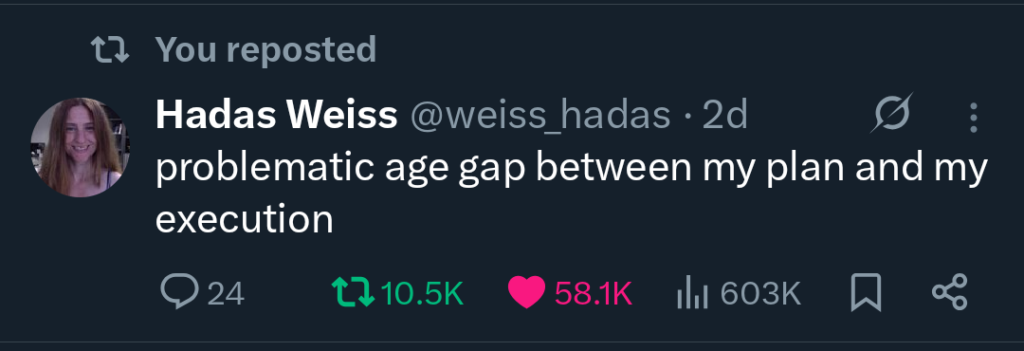
    …in just a second. First, I would like to address my absence on this blog. I saw this tweet a couple of weeks ago that pretty much sums up my relationship with this blog at the moment: 

    Suffice it to say, I have enough ideas to write one blog post a week, but unfortunately not enough executive function. It’s like some backwards version of writer’s block. 

    Anyway, I’m back, at least for now, and today I will be talking about…drum roll please…improv and unscripted comedy!!! Hooray! (Please don’t click away, I promise* this will be fun and interesting!!)

    So, like I mentioned earlier, I attended an improv class last week. One of the cool things about the Disney College Program is that they offer a wide variety of classes and learning opportunities for all of the CPs to attend. (You know, because we have soooo much free time 🙃) 

    Now, I haven’t taken any kind of acting/theater/improv classes since my sophomore year of high school, and there is a reason for that. 

    I am what you might call a “Triple Non-Threat”: 

    • I can’t act
    • I can’t dance
    • and I *definitely* cannot sing (just ask my shower) 

    So you might be wondering: what was I doing in an improv class in the first place? Great question. Well, it all starts with a bad case of strep throat, Instagram reels, and a poor financial decision. 

    Back in November of last year, I got strep throat. (Thank you, Anonymous Disney Guest.) During this time, I was kind of in-between TV shows, which was a problem because I was trapped in my apartment for a couple days and had no shows to watch! So…enter Instagram Reels. I spent a lot of time scrolling and ended up getting a lot of reels from these shows called “Game Changer” and “Make Some Noise.”

    You may have seen one or two of these clips. There are a few that have gone extremely viral (which is how I ended up on this side of Instagram in the first place). Anyway, turns out these shows are part of a company called “Dropout” (formerly “CollegeHumor”). Now, I’m not going to waste too much time describing Dropout, but essentially it’s a comedy streaming service that mainly features unscripted comedy shows. And, after watching a million clips on Instagram, feeling generally terrible (re: strep throat), and some encouragement from my mom, I decided to get an annual subscription (the aforementioned poor financial decision). 

    Well, fast forward a few months, and I’m almost watching more improv than sitcoms (still watching Abbott Elementary every week, of course)! So, when I saw that one of the classes that the Disney College Program offered was a once-a-month Improv class, I thought: 

    YES, that sounds fun, AND I signed up. 

    So on March 31st, I walked into a class called “Improv for Improvement,” armed with all of my extensive Improv knowledge, including: 

    • memories of watching my high school’s improv troupe with my sister in the pre-COVID days
    • hours of various Dropout shows 
    • and also having seen some random improv shows that I found on Netflix (everyone should watch Middleditch and Schwartz

    …and no practical experience. At first, I thought I was just going to be thrust into a group of people and then just have to improvise a scene based on a prompt or something, so I was very prepared to just fail. And maybe die. 

    Luckily, this was not the case. 

    After everyone sat down, the first thing we did was listen to the instructor talk about the purpose of the class. This particular instructor is a Disney cast member who is also part of a local improv comedy group, and she teaches this improv class to different Disney teams to show how improv can be helpful in the professional world. After she introduced herself, we went over three basic principles of improv: 

    1. Yes, And 

    This one is basically in the title. You accept what the other improvisers give you, and also add to it. 

    1. Don’t Think

    I liked this one because of the sheer impossibility of it. Basically, there were two parts to this: don’t overthink your choices in the moment, AND don’t think about what you could have said that would have been better/funnier afterwards. (Which, how dare they–those are, like, my main shower thoughts!) 

    1. No One is the “Star”

    The purpose of improv is working as a group. If one person walks away as the “star” of an improv show, then it probably wasn’t a very good show! I’ll mention Dropout again–one of my favorite things about their shows is that all of the cast members work really hard to make each other laugh and have fun, instead of trying to make themselves the main focus. 

    After this brief intro to improv, we broke into groups of ~6 and basically played improv games for the rest of the class. Once I figured out this is what we would be doing, I started to relax. I also started to get flashbacks to playing “Zip Zap Zop” in my high school Theater 1 class. 

    The focus of this particular class session was “Teamwork,” so all the games we played relied on working together. 

    The first one we played was called “Yes, Let’s!” Basically, you stand in a circle, and then one person jumps in the circle and suggests an activity and mimes doing that activity. Then, everyone else shouts “Yes, let’s!” and does their own interpretations of that activity. 

    My suggestions in this game (“Let’s knit a sweater!” / “Let’s paint a mural!”) were rather boring compared to some others… (“Let’s bury a dead body!”)

    …but it was oddly affirming to suggest something to a group and have everyone enthusiastically agree (even if they were quite literally obligated to). 

    In the next game we played, we had to work together to create a physical representation of different spaces or concepts with our bodies. We did a couple rounds of this, creating shapes like Mickey Mouse, an airplane, and a living room. During this time I got to represent Mickey’s ear, an airplane wing, and the other half of a 2-piece end table set. All in the span of 10 minutes! 

    After that, we had an extra bonus round where we had to create the shape without speaking to each other. The prompt was “Disney attractions,” and when the instructor asked my group which ride we were supposed to be, we found out that half of us thought we were Tiana’s Bayou, and the other half thought we were Tower of Terror…whoops. 

    Hakuna Matata though, am I right? 

    The final game we played was kind of a classic icebreaker game, where we had to line ourselves up by birthday order without speaking. This went surprisingly well; we only had two people out of place in a room of probably 40?? Ish??

    Ok, so why am I telling you about this not-even-Improv-101 class? Well, because after the session was over, I started thinking (critical mistake) and realized that my whole life has kind of been improv recently, and that the instructor was right–having improvisational skills can really be helpful in all aspects of life. 

    Let’s go back through the three basic improv rules again.  (“Yes, let’s!”)

    1. Yes, And 

    Anyone who has ever worked in retail or any guest service role knows the phrase: “the customer is always right.” This means more than just providing excellent customer service, it means that when a guest walks up to you, no matter what they say, you kinda have to just roll with it. 

    I won’t get into any examples this time…but maybe one day I’ll make a post about the time I had to guard a pile of vomit for 20 minutes. 

    The point is, “Yes, and” has more applications than just in an improv class. Even with something as simple as just having a conversation, I’ve discovered that being able to talk with random strangers about any subject is a very useful skill to have. 

    1. Don’t Think 

    As a chronic overthinker, this one is probably the hardest for me. I’m always thinking about the things I could have said that would have been “better” or “funnier.” 

    During the improv class, our instructor explained that there’s no need to think about it, because everyone else is so focused on what they’re saying, that truly they are going to forget whatever it was you said, whether it was good or bad. 

    I have found this to be mostly true; it’s been a week or two since that class and I really only remember a couple of things other people did, haha. 

    All this to say, the spotlight effect is real. Everyone’s not always looking at you, and you have the freedom to make your own choice, even if you’re not sure if it’s the “right” one. 

    I might be just preaching to myself here. 

    1. No One is the “Star” 

    I like how this one applies to real life. If you’re always trying to be the best, or the star of the show, not only will that hurt your relationships, but also you will always fall short. There’s always going to be someone who is “better”/has more experience/etc. But it doesn’t matter because no one is the star! We all have unique experiences and perspectives that we can bring to the table. 

    I remember being in writing classes and being amazed when everyone got the same assignment, or prompt, but all wrote completely different pieces. None of them were the “best,” because they were all so different they couldn’t really be compared against each other. Similarly, we as people are all so unique, there’s no point in playing the comparison game. 

    I guess my main point is: improv is cool and it has practical applications in real life and you should definitely watch as many unscripted comedy shows as you can.

    Please.

    I need someone to understand my references.

    After the class was over, our instructor showed us a slide of improv resources, which included Dropout! Which made me feel very vindicated. Maybe that subscription wasn’t such a bad financial decision after all…

    Anyway, am I “good” at improv?

    No.

    Have I already signed up for the next improv class? 

    Yes, and hopefully it won’t be my last : )

    *the word “promise” here was used in the…metaphorical sense. Yeah, that’s a thing.