Every week, when I’m deciding what to write, I look at my calendar and my photos to see if anything significant has happened recently. Well, this is what my calendar for the past week looked like:

And, besides a couple shots of the EPCOT ball (and the screenshot I just took of my empty calendar), my Google Photos is also looking pretty bleak.
Editor’s Note (which–still me; I’m the editor): I *did* just complete a few Disney Programs classes and earn my Mouseter’s; however, at the time of my beginning to write this post, this was not yet the case.
So, with no major life events to blog about, I turn to my current obsessions and see if there’s anything interesting about them.
Now, anyone who knows me knows I love TV shows. I’m always watching a show. Actually, I saw this stand-up special recently where the comic made a joke about how when her life flashes before her eyes, it’s going to be a reel of all of the TV series she’s watched. I’ve never felt so seen. And convicted.
Anway, I love TV shows, but it’s currently a hard time to be a TV fan. TV series have changed a lot recently. Because of streaming, weekly sitcoms are slowly fading out. In its place are TV dramas that release 10 episodes, each an hour long, all at once exclusively on one subscription streaming platform that costs $15 plus tax (your soul) every month.
A lot of my favorite series are from the 2010s era (think Modern Family, Parks and Rec, Big Bang Theory, etc.), but I didn’t watch them as they were coming out, since I was but a child at the time. I think it would have been really cool to be watching TV during a time when there were multiple shows with new episodes coming out every week.
It’s still somewhat around today; Abbott Elementary is one of my favorite sitcoms that releases weekly. But overall, weekly storytelling is something that is slowly slipping away from popular culture. Which is sad because serial storytelling has historically been an important part of the human experience.
Lately, I’ve seen many complaints about how TV shows are just 7-hour movies now or that we don’t have “filler episodes” anymore. And, like, if you take those two statements without really thinking about them much, you might just say, “Ok…so?”
I mean, what’s the difference between ten 45-minute episodes and twenty-two 20-minute episodes? They both average out to about 7.5 hours of content. And if there’s no filler episodes, that means less time is being wasted, right? Right??
No, not right.
There’s a lot more to consider when talking about how TV has changed, and when people complain about the length of episodes or the fact that there’s no more filler episodes, there’s a lot more beneath that.
Weekly storytelling has been a thing for, well, forever. Even before there were TV shows, there were short stories, periodicals, weekly comic strips, radio shows, etc. And because of the nature of having to produce something every week, not every episode/edition/article had the same “level” of storytelling, hence: filler episodes.
In the olden days, people used to complain about filler episodes because they did not further the overarching plot of the season. However, when these episodes went away, it became clear that they actually served other important purposes, such as furthering character development and continuing the worldbuilding of the show. Having episodes come out every week also gave people something to talk about that was kind of one step above small talk: “Oh, did you see the new episode of xyz show?”
So what’s happened now? Well, streaming, basically. It’s created a phenomenon that I like to call the “Film-ification” of TV, and the “TV-ification” of film. Basically, TV shows and movies have switched places.
What do I mean? I’ll try my best to explain.
We’ll start with TV shows turning into movies.
Before streaming, movies were a bigger deal than TV shows. When you went to see a Marvel movie, you probably expected it to be “higher” quality than whatever workplace sitcom was currently airing. A TV show was something to keep people entertained for 20 minutes when they turned on the TV at home, a film was a “work of art”–something that would shape the culture and conversation for the foreseeable future.
However, with the introduction of streaming, that all began to change.
Introducing: the limited series.
Suddenly, big studios were releasing big budget TV dramas that had film-style production value. These shows were anywhere from 6-10 episodes, 45-60 minutes per episode. This is different from the classic TV dramas, which were also 45 minutes, but there were still 20-24 episodes per season (think medical dramas/police procedurals).
At first, these shows were very popular. Marvel really capitalized on it, releasing many limited series such as WandaVision, Loki, Hawkeye…basically every character that didn’t have a movie yet got a series instead.
The problem with this format, however, was that once the series ended, everyone wanted a season two, because that’s usually how TV shows work. However, these shows weren’t intended to operate like traditional TV. They were a one-time thing, a limited release. Like a movie.
Still, the format worked for a while. Audiences were engaged with the shows, and because the shows were being released by such popular studios, they were getting a lot of views, a lot of attention on social media, and thus were regarded as wildly successful. The pros of a limited series were that you could make a 10-hour story and not have to shave it down to two hours because a theatrical release was no longer necessary. Everyone could just watch it at home on their own time.
So, the goal of TV became not to tell a story over an extended period of time, but instead to capture the audience’s attention for a specific point in time, and get them to talk about whatever was currently releasing as much as possible before they moved onto the next thing.
Another way these limited series became like films is that there was one plotline throughout the entire series. Because of this, the plot felt very drawn out, and character growth was minimal.
So, this combination of plots being drawn out while simultaneously feeling too short without multiple seasons created feelings of dissatisfaction among fans.
And now, because every company has their own streaming service, there are a thousand limited series, and none of them are connected to each other, and it is literally impossible to watch/care about all of them.
AND, even further, now that the production value of these series has increased, many series do not get a next season until many years later (*cough cough* Stranger Things *cough cough*). And everyone forgets what happened previously.
Ok, so to recap: TV shows have turned into movies by upping the production value, drawing out the plot, and releasing all episodes at once, for one time only…until 5 years later when you get “Season 2.” That is the Film-ification of TV: releasing what is basically one movie, just broken up into 6-10 parts.
But now, another, kind of strange, phenomenon has emerged, and that is the TV-ification of Film. How does this work, you may ask? Well, it basically boils down to two things:
- Sequels, Sequels, Sequels
- Everything is One Big Series
We’ll start with point number one. Literally every movie in existence has a sequel, or multiple sequels by now. A common criticism of Disney/Pixar/Marvel etc. is that they are releasing more sequels than original stories. Not only is making a sequel of a popular movie likely to make more money, it’s also significantly easier to work on a story with a world and characters that you already know. There’s also less pressure to convince the audience to watch movies; if they liked the first one, they’re going to want to see the second one. So now, we have film franchises that have more sequels than TV shows have seasons, and it used to be the other way around.
Okay, now point two: everything is one big series. I’m specifically thinking of Marvel for this one. Basically, there are, like, a thousand Marvel movies. And they’re not all sequels (although I think we’re on the…5th…Spider-Man movie??), but they all exist in the same universe, and each movie is critical to understanding the storyline.
This has made it pretty much impossible for people to be introduced to the Marvel Cinematic Universe. They look at the list of 35+ movies now that are all connected (plus the limited series because yeah, those are canon too), and it’s overwhelming. Even as someone who loves the Avengers films, I find it hard to convince myself to keep watching the movies as they come out. The plot is too complicated now, and I don’t have time to go back and watch the previous 100 hours every time something new comes out.
I mentioned in my last post that my sisters and I got introduced to all the major “nerdy” franchises (Star Trek, Star Wars, Harry Potter, Marvel) by watching them as a family as each of us became “of age.” So like, first my parents watched those series with me, then me and my parents watched them with Rachel, then all of us plus Rachel watched them with Sarah, then all of us plus Sarah watched them with Joanna and Bethany, etc.
When Rachel and I were first watching the Marvel movies in 2019, there were 22 movies. Now there are 37 (almost 38) to show Joanna and Bethany as of 2026. That’s 15 movies in seven years; more than two per year.
And so, you can see that TV series and films have switched. Instead of getting a season of TV every year and a sequel film every few years, now we get multiple sequel films per year, and one season of TV every three-ish years. Because it’s quicker to release two hours of content (one movie) than ten hours (one limited series).
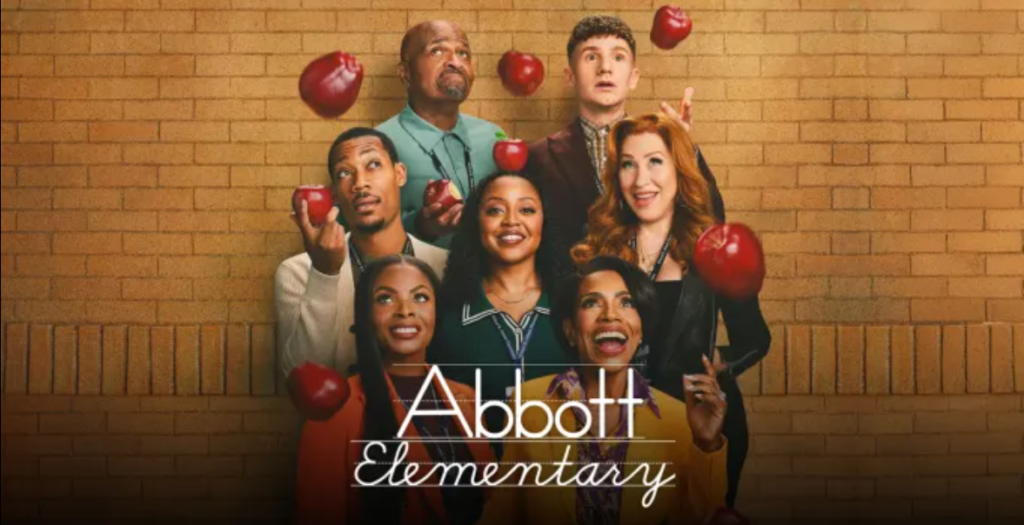
Now, all is not lost. Despite the major film/tv studios following this new trend, there are still good standalone films being released and good TV shows being developed. One of my favorites that I mentioned earlier is Abbott Elementary. This is one of the only examples of a classic sitcom that is still being released currently. There are five seasons, 20-ish episodes in each season, and a new season comes out every year. (It’s been renewed for a Season 6–I’m so excited.)
Another cool series that was released recently was the second season of a show called Jury Duty. If you haven’t watched this show before, I highly recommend it. The premise is basically “What if we made a sitcom, and everyone was an actor except for one person?”
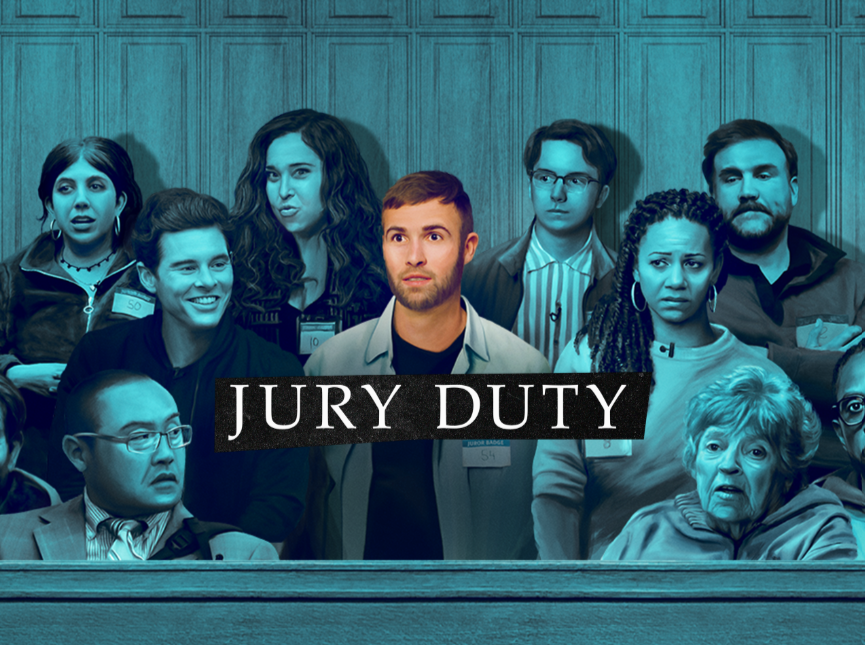
The first season was about an eccentric group of people on a jury. Everyone was an actor except for one guy, who thought everything that was happening was real. The second season was about a company retreat with the same premise: one person thought that the company was real, but everyone involved was an actor. Both seasons are filled with wild and comical circumstances that could only happen in a TV show, but the actors are so good and the scenarios are developed so convincingly that the regular guy of each season fully buys into it. They also managed to find the most genuine guys you can think of, and they both became the “hero” of the show by the end of their respective seasons.
It’s a really cool series, and even though it’s not a classic sitcom, and there were multiple years between Seasons One and Two, it still managed to capture audiences and be a major topic of discussion for a minute. It’s kind of surprising that a show like that can be made now, especially when you think about how easily just having a cellphone could derail a whole show like that. But somehow it still worked, and it was incredible to watch.
So anyway, now that I’ve nerded out about TV shows for a hot minute, I’ll get to the point. I feel like one of the problems streaming has presented is everything is getting made with the standard of perfection. Now that TV episodes aren’t being released every week, the pressure is on to make something literally perfect because otherwise it won’t be worth the five years the audience had to wait to watch it. The only problem is, there’s almost nothing that is actually worth multiple years of waiting to see. Sure, there are some exceptions, but overall, not every piece of media should be intended to be a “masterpiece.”
Sometimes, the best compliment you can give a piece of content, whether it’s a TV show, movie, book, podcast, etc. is that it kept you entertained. If you were able to get into the story, or buy into the world, to the point where you forgot you were watching a show and instead were fully invested in what was happening, that’s a success. And sometimes that means tuning in to watch your favorite characters in a workplace comedy every week, and sometimes it means going to a movie theater to see something new.
Not every form of media is intended to be the same; that’s why there are so many! Every story should be told in the format that best serves the story, not the format that the industry expects. (Maybe next time I’ll talk about how every podcast has a visual element to it now…)
The content that will become timeless is the content that changes the game, and you can’t change the game by conforming to industry standards.
So.
I hope you’ve enjoyed me nerding out (and borderline ranting) about movies and TV shows for six pages. But actually, that’s kind of why I created this blog–because I was starting to get into this mindset where everything I wrote had to be perfect, and so I wasn’t writing anything. And that’s the beautiful thing about blogs: they’re not supposed to be perfect, and more importantly, no one blogs anymore! There’s no expectations, and I can talk about whatever I want 😎
Anyway, maybe one day movies will go back to being movies, and TV will go back to being TV. But for now, I guess I’ll start on my 4th rewatch of Clone Wars (Lucasfilm Animation knows how to make a TV show) until something else catches my attention.