When ChatGPT first released back in, like, 2023, I was so annoyed with people always wanting to talk about Generative A.I. and its consequences. Not because I didn’t care, but because I thought it was so obvious that A.I. was bad that it was physically frustrating for me to hear people argue about its “good uses.” And, I thought that maybe if everyone ignored it, it would just go away.
Well.
Flash forward to 2026, and I don’t think there’s ever a 20-minute period where I’m not looking at, hearing about, or even interacting with some form of artificial intelligence.
All of this to say, I’ve been thinking about A.I. a lot the past few weeks, and that mostly has to do with my current job. Most of you reading this probably know that I’m on the Disney College Program right now, and that my role is merchandise in Disney Springs. But for the last six weeks, I was temporarily deployed to EPCOT for the Festival of the Arts, which started in mid-January and ran until February 23rd. I worked merchandise, which meant I got to work at all the booths that featured artwork from various Disney artists. It was so cool to get to learn about all the art and meet the artists, too.
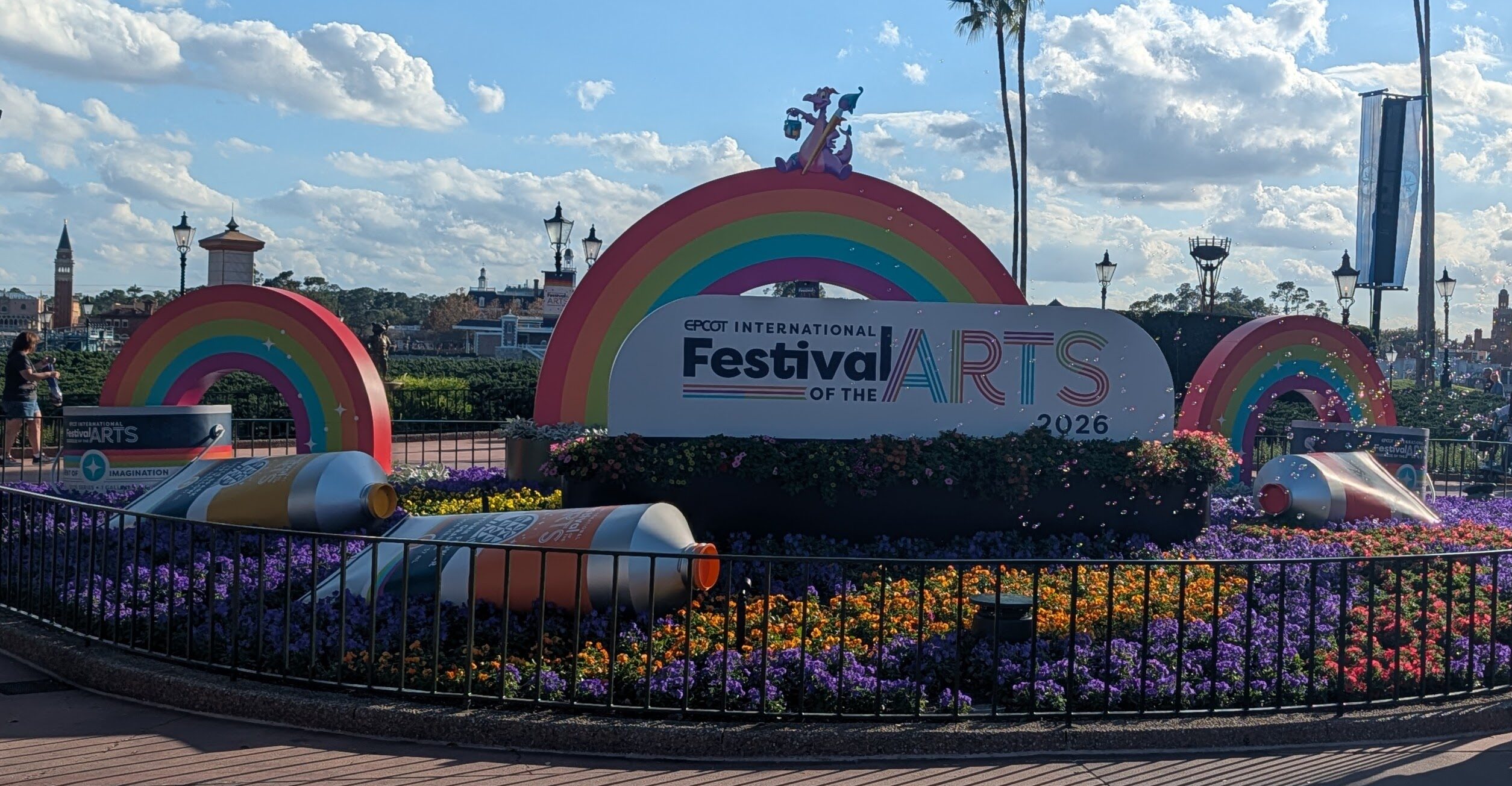
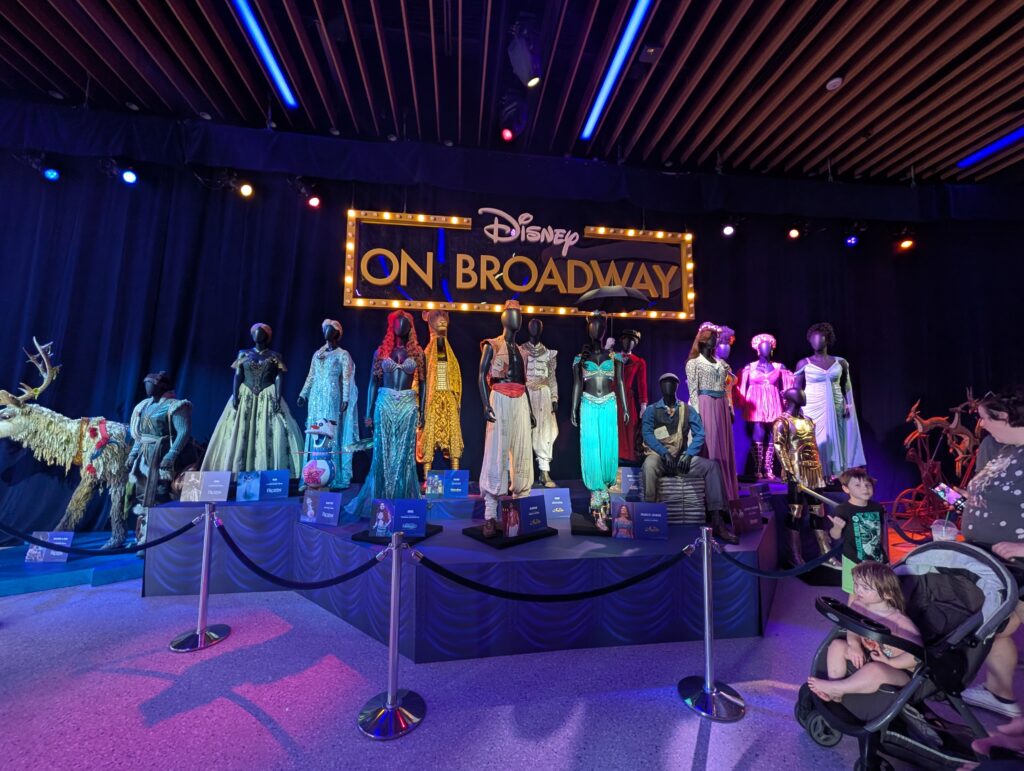
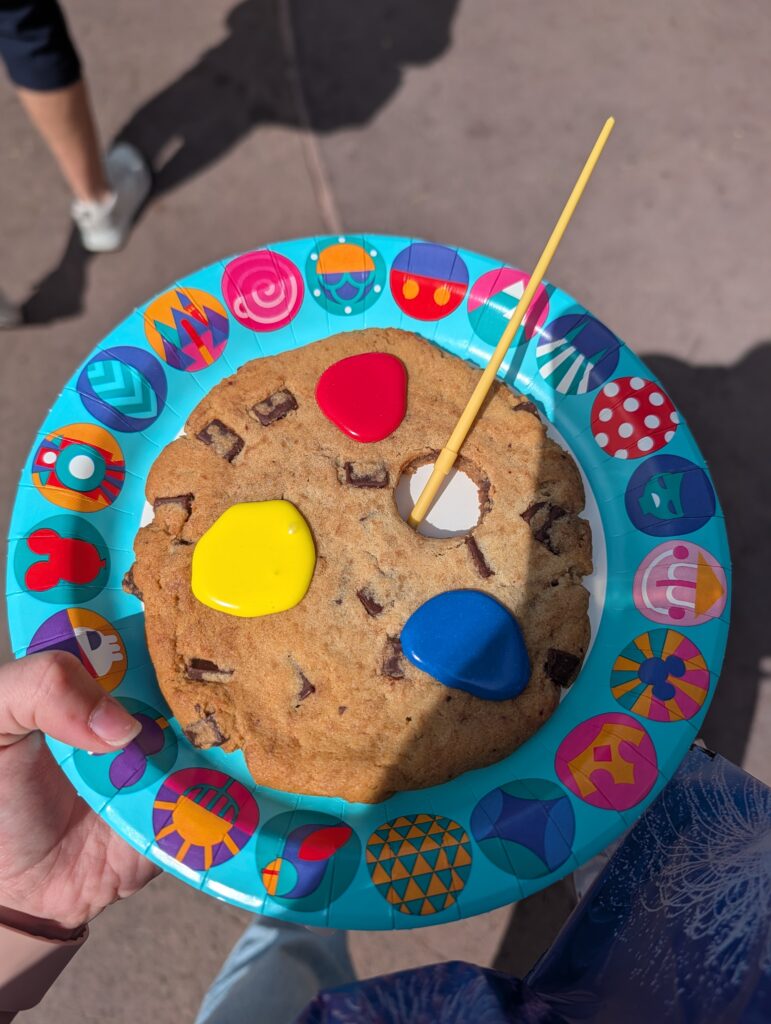
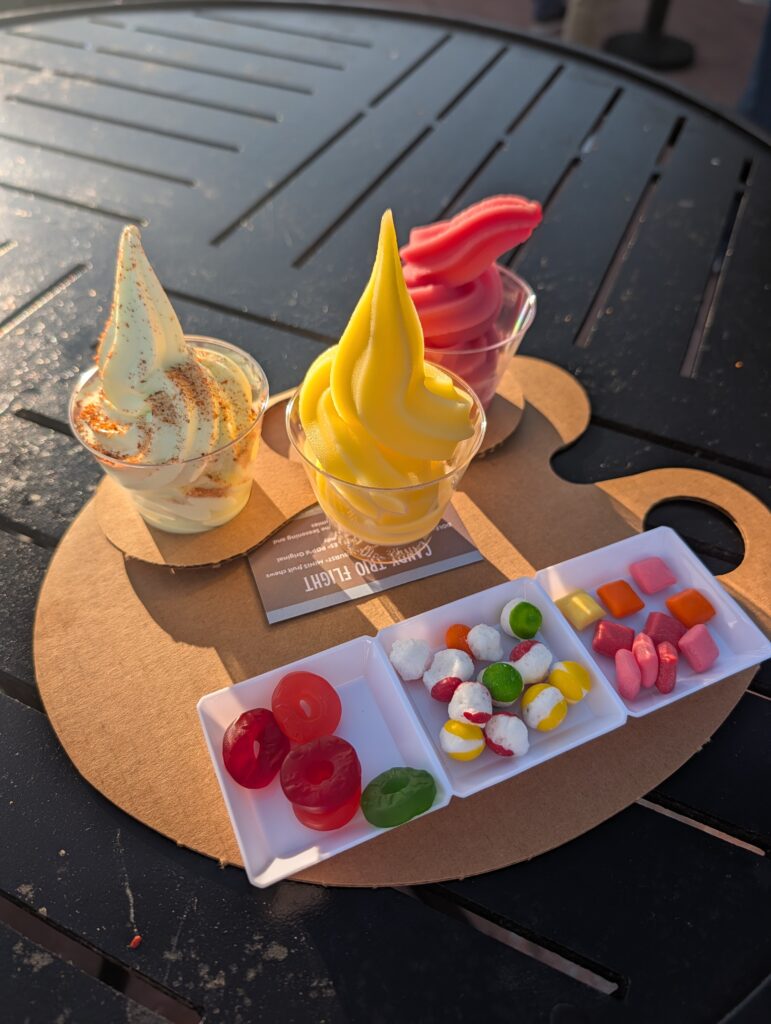
Besides the artist booths, the festival had other experiences, such as a museum of original Broadway costumes and props, performances every night from the original Broadway actors from different Disney shows (I got to watch some of those while I was working–the dream), animation/drawing classes, a giant paint-by-number mural, and of course very good (and very colorful) food.



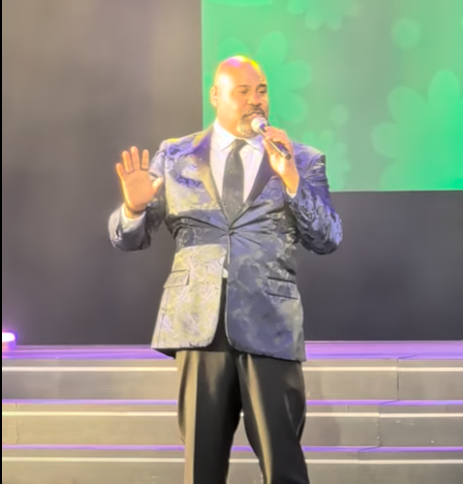
During this festival I got to experience probably the best night of my entire life, which was hearing James Monroe Iglehart (!!) sing “Bigger Than That,” one of my favorite songs from one of my favorite TV shows (“Tangled: The Series”). I could write a whole blog post about that.
But I digress.
Anyway, seeing all of this art, music, and performance got me thinking. Because during the midst of this festival, as I was experiencing all of this human art, I was also hearing a lot of news about A.I. “art.” From the announcement that Disney Plus will eventually platform A.I.-generated videos, to seeing more and more A.I. content on social media, it seems like the world is becoming enamored with the artificial.
So in this age of constantly having to decipher what is real and what is too good to be true, how do we define what actually makes a work of art? Is it the creation itself? Or does the creator have something to do with it? And if so, what makes a good creator? In this essay I will–
Just kidding 🙂 This will not be an essay. Just a silly (but potentially long) blog post 😁
So…buckle in. Lol.
We’ll start with the art itself. What makes a good creation? And what makes something “art”? In my opinion, every good work of art has a story. Story is, arguably, the link that connects all of humanity. We all have stories, and there are even many specific stories that transcend culture and language (like “Cinderella”– there are a thousand different versions of this one story). In order for any song, painting, or movie to connect to its audience, it must have a story.
Think about going to a band or orchestra concert. What happens before the musicians start playing? Usually, the director talks a little bit about the composers and the pieces that will be performed that night. Although it’s obvious that there is a story behind the music, and the music can carry the story on its own, knowing the story heightens the impact of the notes. Meaning comes from that connection between the audience and the sound.
And if you’ve ever watched one of those reality TV talent shows (The Voice, American Idol, Dancing with the Stars, etc.) what do they include before every act? That’s right: an incredibly sad story about the person who’s about to perform. Why? Because they know that the story is going to be what ultimately captures viewers.
Even sports have stories. Athletics, in my opinion, is not that different from theater. We love sports for the “story.” It’s live entertainment, we assign teams “roles” like “underdog,” and we root for a specific outcome for our favorite characters (oops, sorry–“teams”). We even judge games based on how fun they are to watch and criticize the actions of the players. “Can you believe that last play?” Sometimes there are even unreliable narrato– referees.
It all comes back to the story.
My favorite part about working at the Festival of the Arts this year was getting to hear the artists’ stories. Sometimes they talked about what inspired the piece, how they decided what media to use, or just their artistic process. One sentiment that many of them expressed was the fun/joy that they had in the creating process. There are many pieces that I look at differently now because I’ve heard the story behind them.
And speaking of artists, if a good creation must have a story, then that story must have a creator. So what makes a good creator? Well, I think that in this case, maybe we should look at the Creator. And here’s where my Christian worldview kicks in.
First and foremost, I think a good creator is intentional; they create with a purpose. If I were to say that nothing about the world mattered, everything was random, God just kind of snapped His fingers and everything appeared, and then He stepped back, most Christians would probably have to disagree. Every single piece of the universe has a purpose. The Earth is situated in the exact position to support life. All life on Earth is part of the same give-and-take life cycle. Every organism in this cycle has a purpose and plays a part in what makes life possible here. I think that was all very intentional.

I think good creators are also thoughtful and create in their own unique voice or style. And when we create like this, we are following the example of our Creator. Many Christians subscribe to the idea that we are made in God’s image. What does this mean? Essentially, we have God’s fingerprint indented into us. Just like how you can tell if something is written by C.S. Lewis, painted by Picasso, or composed by Lin-Manuel Miranda (That was probably the most random list of people I’ve ever come up with!), we all have a similar “touch”: God’s.
To finish out this section, I think good creators take pride in their work and care about their creation. And both of these ideas are needed. Sometimes we don’t care how the work is done. The process is just a means to an end, and as long as it gets done, who cares what happens in the middle?
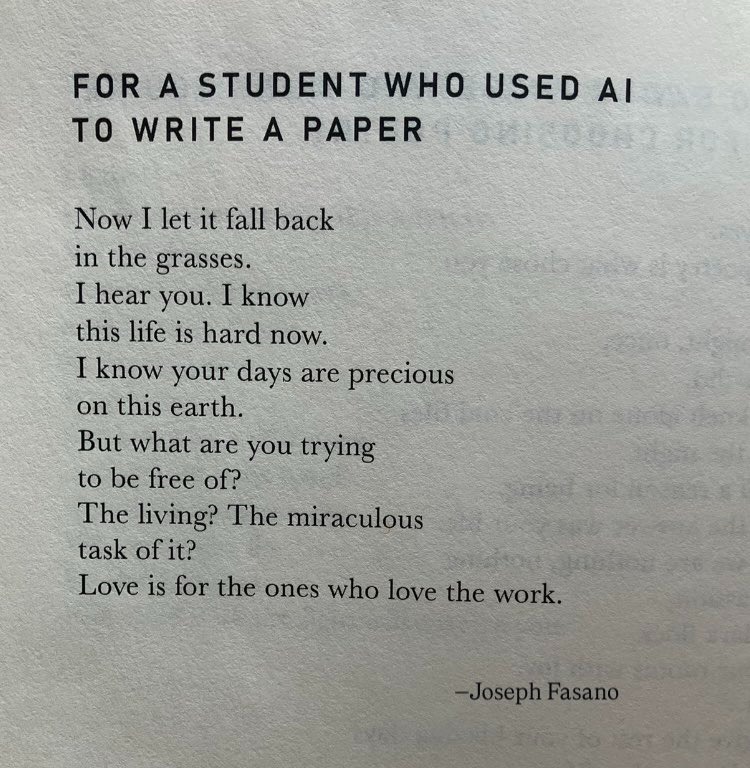
This is where generative A.I. comes in. It’s so easy to just say, “I want a painting of this sunset,” and plug a photo into any A.I. generator and get an instant result. There, the work is done, and you have a “painting.” Or you can say, “I need a four-page paper on the history of film,” and plug in the assignment details and get an essay in three seconds instead of three hours.
But if, at the end of the day, we’re all plugging prompts into machines and sending in identical “it’s not x–it’s y” sentences and “uncanny valley” images, what is the point of any of it? When we’re applying to jobs and all sending in the same A.I.-generated cover letter, how are any of us going to stand out? When we’re submitting portfolios of our work and it all looks the same, how can we expect anyone to recognize our artistic styles? Twenty years from now, will you be able to point to anything you did and say, “That’s my work, and I’m proud of it, and I can defend it”? Or will we become so dependent on a lifeless technology that we forget that the work, the human touch, is the whole point?
The problem is, we’re conflating premise and plot. This is something that many writers run into when planning their novels/screenplays/etc. Essentially, a premise is an idea. When someone says they have an idea for a book or a movie, it’s a premise. A premise is usually a “what if” question:
“What if toys were sentient?” (Toy Story)
“What if cars were sentient?” (Cars)
“What if emotions were sentient?” (Inside Out)
When we plug prompts into ChatGPT or any generative A.I. platform, we’re plugging in premises, not plots.
Plot is what actually happens in the story. When writers have an idea for a story, they start with the premise, or the “what if.” But they soon learn they need more than that to actually write the book. Who are my characters? What is my story structure going to be? How will my main character move through the Hero’s Journey?
Many stories exist that have good premises, but the actual plot, or story, didn’t really quite live up to it. That’s because a premise, no matter how good it is, is not enough to create a story. A.I. generates based solely on premises, and no matter how “good” the premise is, the final result will always fall short, because there is no mind creating a story, only a computer generating a product.
Ok, now I’d like to present some common arguments I’ve heard in favor of generative A.I., and my thoughts on them:
- Everybody’s doing it/we have to keep up with the times/keep up with the rest of the world
This argument is interesting to me, especially when it comes from a Christian perspective because, for the most part, Christians place a large emphasis on not conforming to the world or doing something just because everyone else is doing it.
And if your argument is just that “everyone else is doing it,” let me channel my inner ‘cliche sitcom dialog enthusiast’ and say, “If ChatGPT told you to jump off a cliff, would you?”
- It evens the playing field
There’s this myth that you have to “have the best stuff to make the best stuff.” Some say that A.I. evens the playing field for those who want to create art/produce songs/make movies that don’t have all of the resources that industry professionals do.
I’d like to argue, however, that some of the best art has come out of places where resources were limited. Because creativity is about doing more with less. Think about all the Disney movies that have come out in the past six years. How common has it become to see movies that are almost instantly forgotten? Strange World, Moana 2, Wish, the live action Lilo and Stitch, etc. These are not movies that did badly in the box office (it’s Disney–they’re going to make money no matter what), but they are movies that didn’t really leave much of an impression on the audience (generally). This is because of the opposite effect that having resources can create: the more money and support you have, the less pressure there is to create something “good.” Disney is now implementing A.I. into their streaming service. Why? Because they don’t need the human touch anymore, they need products that sell.
- It saves so much time/I can focus on “more important” things
This argument is, again, interesting from a Christian perspective. Many Christians believe in a literal seven-day creation, in which the world was created in seven 24-hour days. Now, of course, we cannot “for sure” know how the world was created (and this topic would also be a whole other post). But I have a hard time believing the entire world sprang up in seven days when everything else about God’s creation suggests that growth takes time. Seeds take weeks to produce fruit, seasons come around in months, the earth takes a year to orbit around the sun, a human brain takes 25 years to develop, etc. Nothing worth anything happens instantly. There’s value in struggle, reward in patience, and worth in the work.
Now, it is possible that artificial intelligence has its uses, especially non-generative A.I. My youngest sister was recently diagnosed with Type 1 diabetes. Apparently, A.I. is being used to develop an insulin pump that automatically calculates how much insulin your body needs and provides it, without you having to pre-calculate how many carbs you’re going to eat. This is the kind of tech I can get behind.
A.I. may even have its uses in other aspects of the world. I’m sure some of the elements I used to design this website are somewhat A.I.-powered, so I really can’t judge anyone. The point of this blog post is not necessarily to campaign for A.I. to be eradicated…but I do think we would probably be better off without it anyway 😂
So what to do with all of this? I’ve just written five Google Doc pages (and if you’ve made it this far, you’ve just read five Google Doc pages) about A.I. How to conclude?
I guess my main point is this: It’s important to engage in humanity. The world is so divided right now; what we need is more human connection, more of a human touch, not less. As an English major, my field of study was under the “humanities” umbrella: an area of academics that studies art, religion, history…essentially what it means to be human. But, of course, you don’t have to have majored in the arts to engage in humanity.
There is so much to be gained from human creation: reading a book, watching a movie, going to a live performance, listening to music, etc. And there is so much to be gained from being a creator: writing, performing, crafting, painting, etc.
In a world of instant gratification, find joy in the process before the product.


Leave a Reply to Tim Falk Cancel reply